Short answer: yes, it can. Not every time, and not because precum is "full of sperm" itself, but because it can pick up leftover sperm sitting in the urethra from an earlier ejaculation. If you're trying to conceive, that's useful information rather than just a scare stat.
I'll be honest, I didn't think about any of this until we were a few months into trying.
I'd assumed conception was an on/off switch tied to the moment of ejaculation, and that everything before it was just build-up that didn't count. It took a research rabbit hole (NHS guidance, a couple of real studies, one fairly direct conversation with Sarah) before I realised how wrong that was. If half the vocabulary still sounds like a foreign language, our TTC glossary is a gentler starting point than the route I took.
Why Precum Isn't as "Sperm-Free" as I Thought (The Urethra Thing Nobody Explains)

Precum, or pre-ejaculate, is mostly there to clean and lubricate the urethra before ejaculation. It comes from the Cowper's glands rather than the testicles, which get so little attention that the main review of them is titled "A neglected gland". What they contribute is a lubricating mucus, which is all the standard anatomy reference credits them with. So on paper precum isn't supposed to carry sperm, and I took that at face value for a good while.
The bit nobody explains is what happens when sperm are already sitting in the urethra from an earlier ejaculation. That fluid can carry some along on the way out, which is why NHS guidance on contraception treats the withdrawal method ("pulling out") as unreliable. The same mechanism runs in reverse when you're trying to conceive.
It matters because sperm are more durable than I'd assumed, and can survive for several days inside the female reproductive tract. A small amount arriving on the right day isn't nothing.
👉 It's not that precum is guaranteed to contain sperm. It's that you can't reliably assume it doesn't.
What Does the Actual Research Say? (Two Studies, Two Different Numbers)
To be honest, the research here is murkier than I expected, and it's genuinely moved over time.
The paper most people cite is a 2011 study by Killick and colleagues, published in Human Fertility, which collected pre-ejaculate samples from 27 men on several occasions each. 41% of the men had sperm in at least one sample, and in most of those cases a decent proportion was motile rather than just sitting there. The odd part is that sperm showed up either in all of a man's samples or in none, which points to a "some men leak, some don't" situation rather than a roll of the dice.
A smaller 2024 pilot study in the journal Contraception looked at men practising careful withdrawal technique and found a much lower detection rate, with sperm in a noticeably smaller share of samples.
I'm not going to pretend I can reconcile those numbers. Sample sizes here are small and technique clearly matters, so what I took away is narrower than any percentage: sperm in precum is real and documented, but how often it happens varies a lot from person to person. That's why a semen analysis, run against the WHO's reference manual, tells you more than any population average, and part of what pushed me into taking my own sperm quality seriously.
That uncertainty was sort of the point for us. We weren't building a precise model of risk, we were trying to conceive, so we started treating precum much like ejaculate on a fertile day.
It wasn't about calculating exact odds. It was about not leaving anything on the table during the days that actually mattered each cycle.
Where This Actually Fits Into a Real Fertile Window
All of this only means anything if you know which days count, and precum isn't tied to your cycle at all. It turns up with arousal on any day of the month.
What matters is whether it's happening during your actual fertile days, which for most people is roughly the five days before ovulation plus the day of ovulation itself, according to the NHS's own explainer on periods and fertility. That window traces back to Wilcox and colleagues in the New England Journal of Medicine, who followed 221 women trying to conceive and found conception only ever happened when sex fell inside a six-day stretch ending on the day of ovulation, with the odds climbing from about 1 in 10 five days out to 1 in 3 on the day itself.
We ended up using a few things to work out where we were in the cycle, rather than guessing. They are the same markers the NHS lists under natural family planning, just pointed in the opposite direction:
- Ovulation predictor kits (OPKs), which pick up the LH surge that happens 24 to 36 hours before ovulation
- Basal body temperature tracking, which confirms ovulation after the fact, so it's good for spotting a pattern over a few cycles, less useful in the moment
- Cervical mucus changes, which sound unscientific right up until you pay proper attention for a couple of months
None of that is precum-specific. But once we knew our fertile window, the precum question stopped being abstract and turned into "is today one of the days we can't afford to be casual about". The honest answer was usually yes. After that it's just the two week wait, where testing too early caused us more grief than the fertile window ever did. The NHS puts hCG at around six days after fertilisation and is blunt that a negative isn't reliable if you test before then.

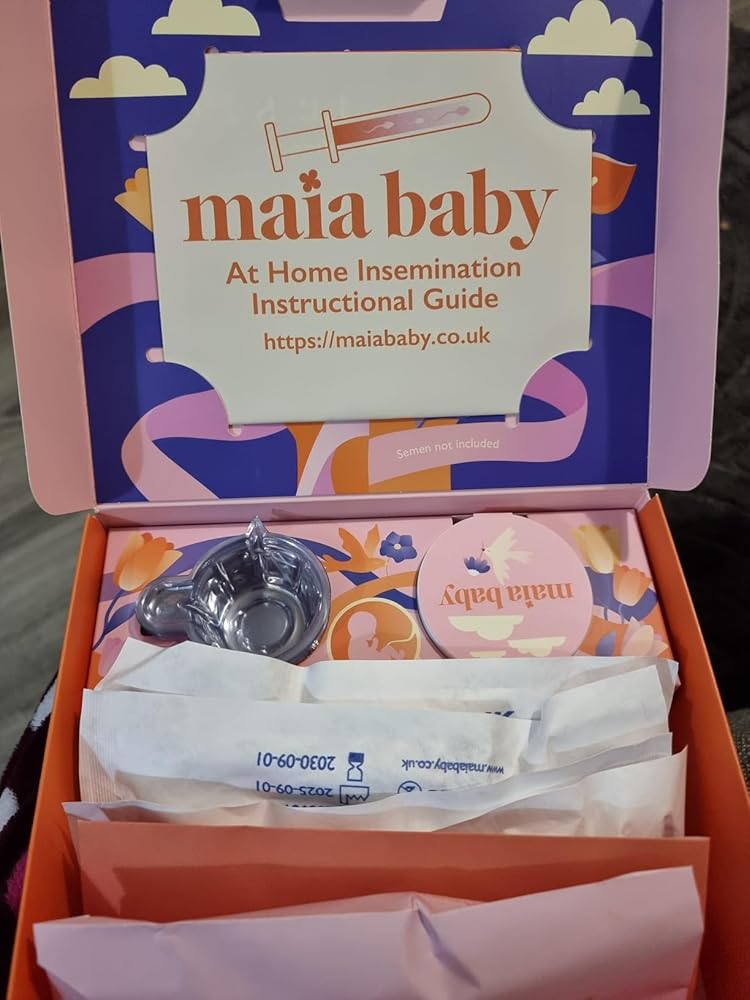
Does Any of This Matter If You're Using At-Home Insemination?
This is the one angle most of what we read didn't cover, probably because almost none of it was written with insemination in mind.
If you're collecting a sample for at-home insemination, the precum question mostly stops mattering, because you're working with the actual ejaculate rather than incidental contact. Two things are still worth knowing.
First, if there's any genital contact around the same fertile window outside the insemination itself, everything above still applies. Precum from that contact isn't automatically sperm-free either.
Second, collection technique matters more than people expect. Pre-ejaculate arriving in the collection pot before the main sample isn't worth worrying about, since it isn't being used as the sample either way, and the things that genuinely do affect an at-home attempt (timing, handling, leakage afterwards) sit a long way from the precum question. The real overlap is just that fertility isn't one on/off moment, whichever method you use.
How This Actually Changed What We Did
A few small things shifted once it clicked for us:
- We stopped timing everything around the main event and started thinking about the whole window of contact across our fertile days, which is closer to the NHS's plain advice to have sex every 2 to 3 days than to chasing one perfect moment
- We got more serious about tracking ovulation properly, instead of a rough guess at "somewhere around mid-cycle"
- We stopped assuming any kind of withdrawal or timing trick was doing us favours in either direction
That last one cleared out a few other habits we'd never questioned, like whether lying still afterwards does anything, or whether particular positions make a real difference. The evidence on both is thinner than the confidence people have about them.
None of it was dramatic. It was more of a mental shift than a practical one.
What About the Withdrawal Method Itself?

This came up often enough in our reading that it's worth addressing head on, even though we weren't using withdrawal either way.
For couples using it to avoid pregnancy, the failure rate is high compared with most other methods. The standard reference is James Trussell's review in Contraception, which puts withdrawal at 4 in 100 over a year of perfect use and 22 in 100 over a year of typical use. Precum-carried sperm is one of the reasons given for that gap, alongside human error in timing. Trussell is refreshingly blunt that the perfect-use number is "a guess", reasoning that the pregnancy risk from pre-ejaculate is modest. The work he leaned on points the other way from Killick: a 2003 study in the Journal of Assisted Reproduction and Genetics checked pre-ejaculate from twelve men, found no sperm in any of it, and concluded the fluid "cannot be responsible for pregnancies during coitus interruptus". Which tells you how thin this evidence base still is.
On the trying-to-conceive side, that unreliability was reassuring in a strange way. If withdrawal can't reliably prevent pregnancy, we didn't need to worry that incidental precum contact earlier in a fertile day was competing with the main event later. It isn't either/or, and every bit of exposure during the fertile window is part of the same picture.
Precum and Pregnancy: Quick FAQ
Can you get pregnant from precum alone, without ejaculation happening?
Yes, it's possible, and it seems to come down to whether sperm from an earlier ejaculation is still sitting in the urethra at the time.
Does washing or urinating between rounds reduce the risk?
Some sources suggest urinating can help clear leftover sperm out of the urethra, but we never found it framed as reliable, so we treated it as a "can't hurt" habit rather than a guarantee.
Is this only relevant to people trying to avoid pregnancy?
No. If you're trying to conceive, knowing that precum isn't "safe" in either direction is genuinely useful, because it's one less thing you might be quietly working against.
Should I track precum instead of tracking ovulation?
No, and this tripped us up early on. Precum isn't tied to your cycle at all and shows up whenever there's arousal. Track ovulation properly first, then treat precum as one more reason not to leave the fertile window to chance, not a replacement for knowing your fertile days.
Does how long it's been since the last ejaculation matter?
It seems to, though the research isn't precise about timings. The logic is that more time and more urination since the last ejaculation clears more leftover sperm from the urethra, but nobody has published a reliable "wait this long and you're safe" number, so we didn't plan around it.
Is precum the same for everyone?
No, and that's one of the more consistent findings across the research. Some men's samples never showed sperm across repeated tests while others showed it every time, which suggests an individual pattern rather than random variation.
Looking back, the precum question was a small piece of a much bigger realisation. Trying to conceive forced us to actually understand our own bodies, instead of running on assumptions picked up years earlier from nowhere in particular.
Some of that was straightforward. Some of it, this included, was oddly emotional, because it meant admitting how little either of us really knew going in and then working through it together rather than separately. That was harder than the research, and if it's started to sit heavy, that's normal too. Reading other couples' accounts of how it eventually went helped more than I expected, mostly because it made it feel less like something we were getting wrong on our own.
Keep Reading: Helpful TTC Guides
Looking for more evidence-based support while you're trying to conceive? These guides go deeper on related questions: